

Popcorn and Pedagogy
one thing education can learn from each of the Best Picture nominees - Pt. 2

With just two weeks until the biggest night for movies, I remain one of the few diehards who still watches the entire Oscars telecast live. But you don’t need to stay up for a Big Slap or Envelope Mix-Up moment to appreciate what this year’s nominees can teach us. Last week, I shared insights from half the Best Picture slate—now, here’s the rest, in no particular order.
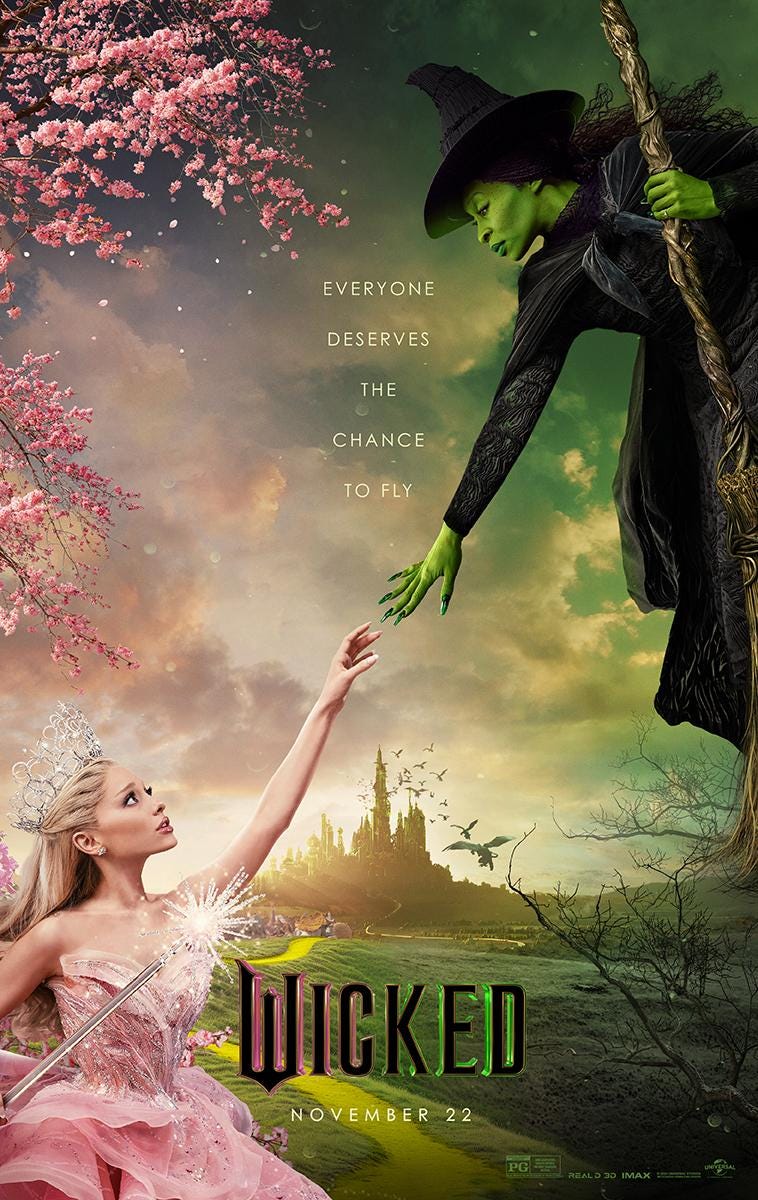
Go For Broke
I’ve never read the book, but apparently, the anti-fascist and animal rights themes in Wicked are much stronger in the novel than in the musical or film. Still, in the movie’s version of Oz—where the Wizard seeks to maintain power and control—there’s a goat named Professor Dillamond who teaches his students about animals being silenced and losing their rights. Spoiler alert: things don’t end well for Dillamond because he chooses to resist. He’s removed from his classroom and punished for speaking out.
Dillamond is a fearless teacher, but what makes his actions so powerful is that in a climate of fear and oppression, his teachings become even more critical. He has a cushy job, a sweet little goat jacket, and tenure, yet he still leverages his privilege to stand up for those being silenced. His example is particularly relevant for those of us who aim to be anti-bias/anti-racist (ABAR) educators in today’s climate. Not everyone who prioritizes equity in their classrooms can take a Dillamond-like risk right now, but those of us who can, must. Thinking about Dillamond’s stand reminded me of James Baldwin’s A Talk to Teachers which was given 62 years ago and is unfortunately still relevant today:
“To any citizen of this country who figures himself as responsible — and particularly those of you who deal with the minds and hearts of young people — must be prepared to ‘go for broke.’ Or to put it another way, you must understand that in the attempt to correct so many generations of bad faith and cruelty, when it is operating not only in the classroom but in society, you will meet the most fantastic, the most brutal, and the most determined resistance.”
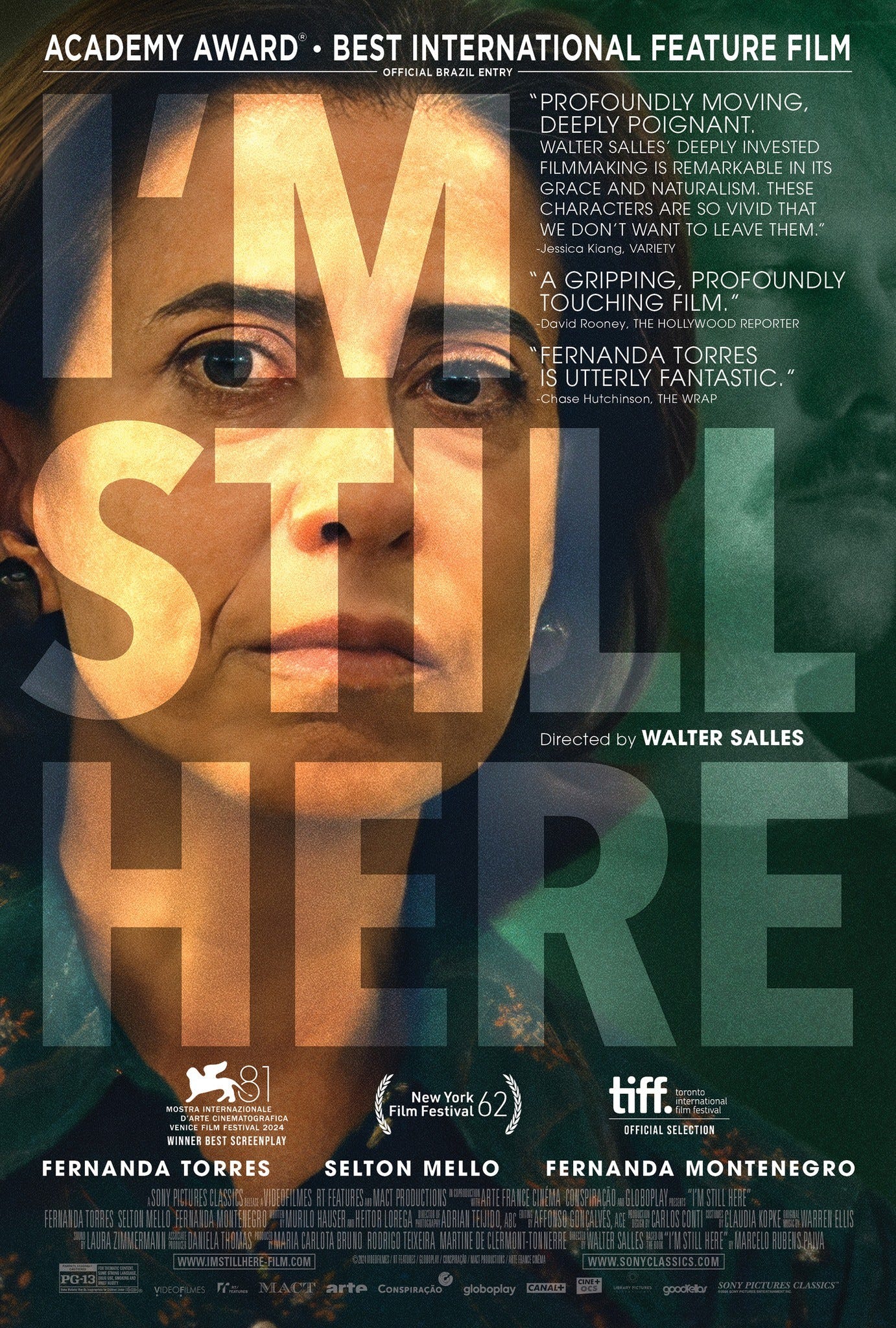
Smile
Just as A Complete Unknown hinges on the strength of its lead actor, so too does I’m Still Here. Fernanda Torres delivers a powerhouse performance in this true story about a woman searching for her kidnapped husband during the Brazilian dictatorship of the early ’70s. Her character, Eunice, is a mother of five, and one of the film’s most striking moments comes when a photographer asks her and her children to look sad for a newspaper story. Eunice refuses. Instead, she tells her children to smile.
Mothers are especially adept at this—the ability to “smile” through hardship as an act of protection. Teachers do this too. I’m not talking about a fake, toxic positivity. I’m talking about a deliberate act of resistance. A way to influence the world around them. A proactive action that can literally change your mind. I used to subscribe to the adage, “leave it at the door”—the idea that teachers should shut off their personal lives when stepping into the classroom. The problem?
We aren’t robots.
If there’s one group that can spot inauthenticity from a mile away, it’s children/adolescents.
These days, I follow a different adage. A fellow teacher once told me, “Our job is to be windows, not doors.” I love this. Teachers don’t have to pretend hardships don’t exist, but they should share only what’s developmentally appropriate—offering students a glimpse, not a burden. So let’s be windows. And smile.
“Smile though your heart is aching
Smile even though it's breaking
When there are clouds in the sky, you'll get by
If you smile through your fear and sorrow
Smile and maybe tomorrow
You'll see the sun come shining through for you”
-From Charlie Chaplin’s song, Smile
I’ve Created A Monster
By far the most surprising Best Picture nominee, this body horror film about aging and fame is bananas. I loved the first two acts, but my stomach couldn’t handle the final third. To be honest, I’ve spent two weeks trying to extract a meaningful lesson for teachers from The Substance and I’ve got nothing. Except maybe for the obvious: the film’s commentary on societal expectations and the patriarchy’s impact on young women is as relevant in classrooms as anywhere else (see my note about dress codes below).
That said, there’s a great passage from Maria Montessori’s 1946 writings that eerily connects to the final act of The Substance. I can’t say exactly how without spoiling it, but this is for all my Elisasue-heads out there. IYKYK. 😉
"Humanity is a monster when adult—bloodthirsty, indulging in continuous slaughter. But the monster does not come to life all of a sudden. Adulthood is the result of years of toil and struggle. He who constructs this adult person...is the child.”
Demi Moore is the favorite to win Best Actress for her role as a woman who was not created in one moment, or even one year. Maybe all she needed was a few good teachers to help her through her “years of toil and struggle.”
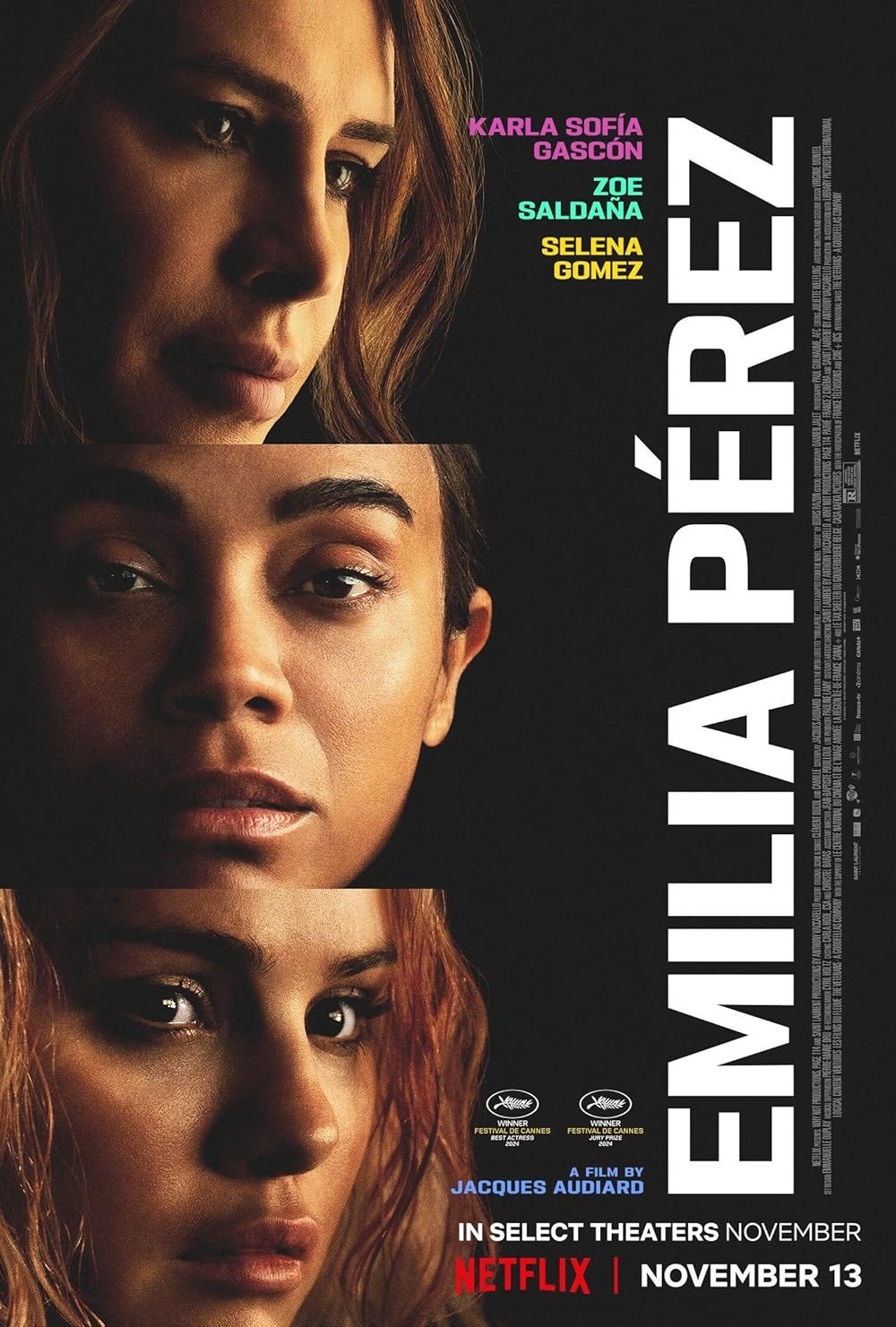
Swing Big
Leading the field with 13 nominations and a heap of controversy, this musical crime drama is a swing. Between its themes—cartel violence, gender identity, transformation—and the news of Best Actress nominee Karla Sofía Gascón’s problematic tweets, Emilia Perez has garnered the kind of attention that no longer qualifies as ‘any press is good press.’
I didn’t love Emilia Perez, but I found it immensely entertaining. A film that, even when I was laughing at it, I couldn’t look away from. That’s because it’s a big, giant swing. Audacious and bold. It’s a film that doesn’t give a shit what you think. An important part of being a teacher or administrator is adapting to the needs of the families you serve. But just as important? Boldly articulating and standing by policies that align with your personal and your school’s mission.
Parents advocate for their child. Teachers advocate for the entire classroom community. Sometimes, those things are at odds. But, like Jacques Audiard taking a stand for his vision, educators can embrace their why and take their own big swings.
Listen Up
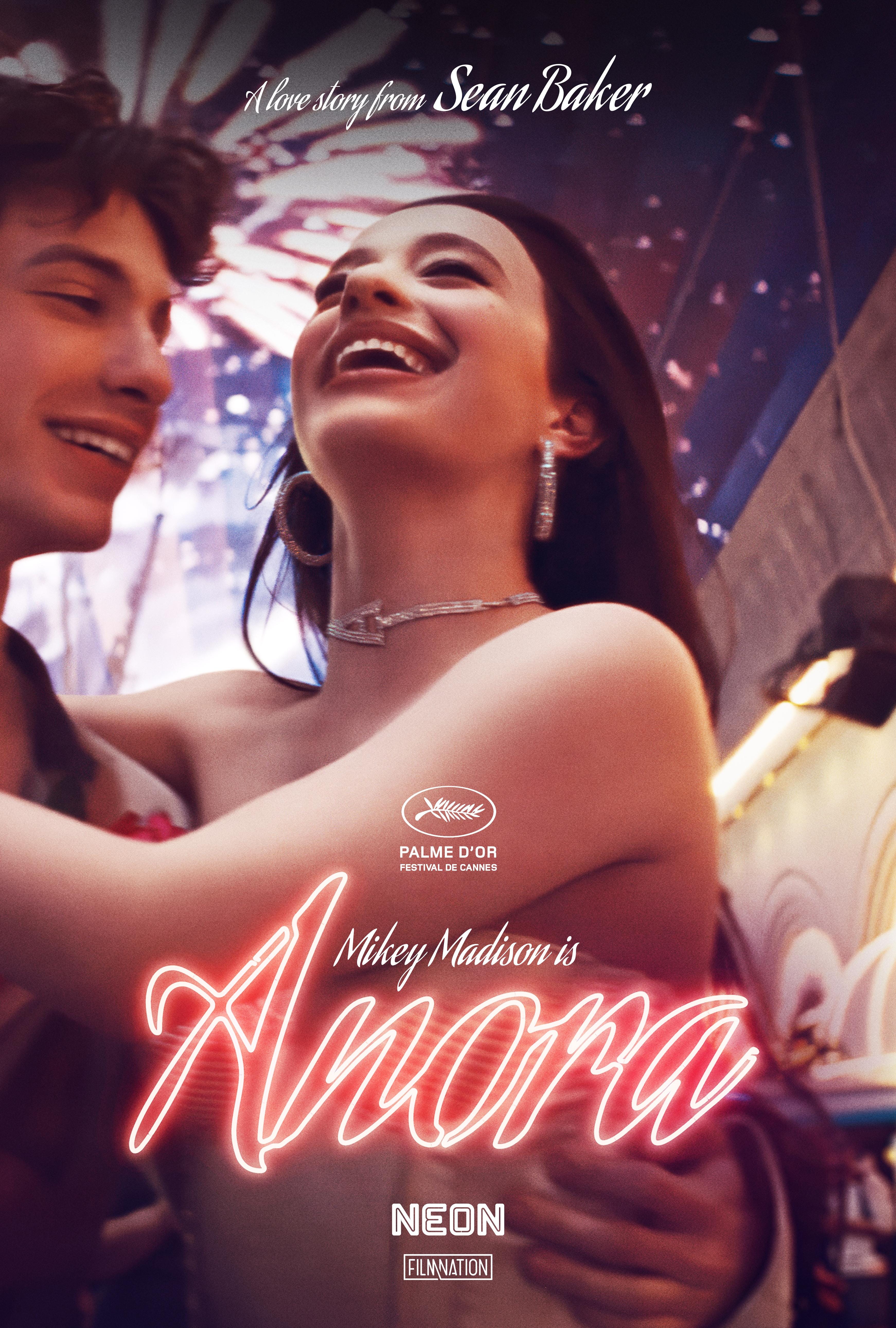
Sean Baker made one of my favorite films of all time - The Florida Project. Seven years later, he’s finally getting the acclaim he deserves with Anora, which I predicted in my last post will win Best Picture. If it does, it will certainly be the raciest Best Picture winner the Academy has ever awarded (aside from maybe Midnight Cowboy, which was risque for its time but tame by 2025 standards). The first half of Anora is mostly sex which might be surprising except that this is an Academy that has become more diverse and international in recent years, which means more members who don’t have a traditionally American, puritanical idea of what’s acceptable in art (see the filmmakers of The Brutalist talking about that here). The Oscars are the biggest platform for film and expanding the kinds of movies that are celebrated is a good thing. As the voting body becomes more diverse and younger, it generates a blowing off of dust and updating ideas about what’s acceptable for the masses.
I love watching this same phenomenon happen in real-time with the middle school students I work with—young people challenging outdated norms and demanding change. Take dress codes, for example. While some traditional educators see certain styles as inappropriate, my students see them as empowering statements of autonomy and body positivity. They’re not just asking for new rules; they’re reshaping the narrative about self-expression and equity. And like all social progress, it’s the youth who push us forward. As educators, we have a choice: ignore or listen. Good teachers know which one leads to real growth.
The best films have the power to teach us about life—in the case of these five films, lessons of resistance, resilience, and redefining norms. I’ll be watching March 2nd for which lessons the Academy connects with.
And just for fun, my predictions:
Picture - Anora
Director - Sean Baker, Anora
Actress - Demi Moore, The Substance
Actor - Timothee Chalamet, A Complete Unknown
Supporting Actress - Ariana Grande, Wicked
Supporting Actor - Kieran Culkin, A Real Pain
Original Screenplay - The Substance
Adapted Screenplay - Conclave